Baby Milestone 2 Months Embroidery Review
As an embroidery designer who regularly digitizes and tests motifs for small business merchandise, I always look at a new machine embroidery design with a commercial lens. The Baby Milestone 2 Months pattern caught my attention immediately. While the Nursery category suggests a soft, sentimental use, my first instinct was to evaluate how this design could work for brand patches, custom apparel, and everyday merch that small businesses rely on. If you run a boutique, a handmade shop, or an Etsy store that thrives on personal touches, this embroidery file deserves a careful, honest look before you commit it to production.
First Impression and Visual Personality
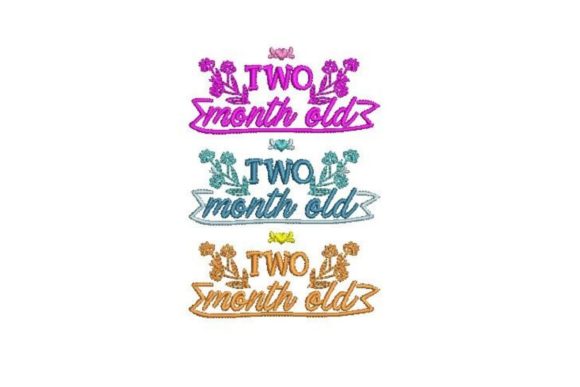
Opening the digital embroidery file preview, I was greeted by a friendly, warm aesthetic that leans heavily into celebratory charm. The Baby Milestone 2 Months design feels playful and handmade, not corporate or sterile. It carries a softness that would appeal to baby boutiques, children’s photographers, and maternity brands, but I also see potential for businesses that want to add a gentle, personal accent to their product line. The lettering and surrounding details (if any) likely carry a rounded, organic shape, making it feel approachable rather than formal. For a brand built on emotional connection—like a local bakery that marks customer anniversaries or a bookstore with a loyalty program—this aesthetic could translate into something unexpectedly memorable.
However, if your brand identity is minimal, architectural, or ultra-modern, you’ll need to pause. This Baby Milestone 2 Months design does not shout sleekness; it whispers nostalgia. That’s a strength for the right small business merch, but it’s not a universal fit.
Business Applications for Small Brands
I always run a new motif through a list of potential placements, because a good machine embroidery design must perform on more than a flat sample. Here’s where Baby Milestone 2 Months could genuinely shine for a small business:
- Embroidered patches for baby gift sets, milestone blanket add-ons, or limited-edition drops.
- Chest logo accents on work shirts for a children’s resale shop, daycare staff, or pediatric clinic uniforms.
- Sleeve details on hoodies or rain jackets for a baby brand that sells outerwear.
- Cap embroidery for a child-focused event or a charity run celebrating early childhood.
- Tote bag design for a book subscription box aimed at newborns.
- Apron embroidery for a bakery that hosts “baby’s first birthday” parties.
- Product packaging accents—stitched onto fabric pouches or wrapped around candle jars from a nursery-inspired line.
What struck me most was the adaptability. You could treat the Baby Milestone 2 Months emblem as a temporary seasonal badge, or integrate it permanently into a “milestone collection” across multiple products. For Etsy sellers creating printable mockups, this design can elevate a listing from generic to curated. A well-placed embroidered patch in a lifestyle photo instantly communicates care and craft.
Performance on Apparel, Patches, and Accessories
When I stitch out a design for the first time, I test it on fabrics that real small business owners use. For Baby Milestone 2 Months, my mental run-through included soft cotton, denim, canvas tote bags, and structured caps. On a onesie or a thin jersey knit, the design must be stabilized aggressively—I would never skip a cutaway stabilizer here. The fabric texture of baby garments is often very soft, which means stitch density needs to be low enough to prevent buckling but high enough to keep the design legible.
On a dark uniform, contrast becomes everything. If the thread colors you pick are too close to the fabric, the Baby Milestone 2 Months illustration will disappear at arm’s length. I always test the embroidery file in black and white first, just to see if the silhouette holds up. For curved surfaces like cap fronts, the design might need slight repositioning because the message and any decorative elements must fit within the critical center panel. Small lettering is always a risk—if this design includes tiny text, I’d recommend scaling up or simplifying for reliable stitch-out.
Stitch Density, Scaling, and Placement Tips
One of the first questions I ask before committing a digital embroidery file to a production run is whether it can be resized without breaking. Not all embroidery formats handle scaling gracefully. The Baby Milestone 2 Months file may come with multiple embroidery file formats, which is helpful, but you must still check if the stitch objects were digitized for a specific hoop size. If you try to force it into a tiny patch area (e.g., 2×2 inches), fine details could turn into a tangled mess. I always run a sample on scrap fabric before stitching on the final product.
Pay close attention to thread colors and their relationship to the background. A pastel thread on a natural canvas tote can look lovely; the same pastel on a white T-shirt might wash out. I usually test at least two colorways—one soft and one bold—and present them to the client as mockups. If the Baby Milestone 2 Months design includes dimensional elements or layered satin stitches, you’ll need to watch thread tension and stabilizer choice to avoid puckering on lightweight fabrics.
Brand Identity and Customer Perception
From a branding standpoint, a motif like Baby Milestone 2 Months sends a clear message: this business values milestones, tenderness, and personal connection. When a customer sees that emblem on a product, they don’t just see a decoration—they feel a story. That emotional hook can increase perceived value, especially for handmade product lines and small-batch merchandise. If your brand already uses soft, approachable design assets, adding this embroidery could strengthen recognition and trust.
However, if your business identity leans toward rugged, industrial, or luxury minimalist, this design will create visual inconsistency. I once saw a modern furniture brand try to use a baby-themed patch on tote bags and it confused their audience. Baby Milestone 2 Months works best when the brand’s voice already includes warmth, playfulness, or family-centric values. For a bakery that sells celebration cookies, or a florist that does baby shower arrangements, this design becomes an extension of their story—not a detour.
On larger items like aprons or tote bags, the motif can act as a focal point that sparks conversation. A shop assistant wearing an apron with a delicate “2 Months” mark might get asked, “What does that mean?” That’s free engagement, and it deepens customer relationships. Small business merch should never be silent; Baby Milestone 2 Months has the potential to speak softly but clearly.
Practical Embroidery Designer Checklist
Before you send the Baby Milestone 2 Months file to your machine, run through this quick checklist. These steps save time and reduce wasted materials, especially when you’re building a branded product line.
- Test the embroidery file in black and white first. Look for contrast and shape clarity.
- Check if the design works at small patch size. If the stitch density is too high, details will blur.
- Review thread color contrast against your chosen fabric. Don’t rely on screen previews.
- Inspect spacing between elements. Overly tight overlaps cause thread breaks.
- Confirm the hoop size needed. The seller likely provides a recommended hoop, but verify before buying.
- Test on real fabric that matches your finished product—not just on a backing sheet.
- Use proper stabilizer. For stretchy or textured fabric, a mismatch will distort the design.
- Create a printable mockup for client approval. Show the design on the actual product to align expectations.
- Compare it beside other design assets you use. Consistency across your catalog matters.
- Confirm commercial embroidery licensing. Even if multiple embroidery file formats are included, make sure your intended business use is covered.
I also advise keeping a stitch-out log. Note the thread brand, colors, stabilizer type, and machine speed. When you scale your small business merch, this record becomes a valuable reference. The difference between a professional brand and a hobbyist often comes down to repeatability, and Baby Milestone 2 Months must stitch out identically from the first piece to the hundredth.
Why Baby Milestone 2 Months Deserves a Thoughtful Test Run
After examining how the Baby Milestone 2 Months design could function as an embroidered patch, a branded apparel accent, or a detail on a tote bag, I see genuine promise for niche small businesses. It will not suit every brand, but for those operating in the Nursery space or any venture where soft, joyful communication is part of the identity, this machine embroidery design can elevate a simple product into a meaningful keepsake.
Remember that the digital embroidery file comes with multiple embroidery file formats, which reduces conversion friction, but you must still verify compatibility with your machine and software. Do not skip the sample run. Check the stitch density, thread color layering, and scaling before you commit to a full production batch. When used with care, Baby Milestone 2 Months can become a small but powerful visual signature—something customers associate with your brand’s heart and handmade authenticity.
Ultimately, a good commercial embroidery design isn’t just about looking pretty on a screen; it has to stitch cleanly, wash well, and communicate a feeling. Baby Milestone 2 Months passes that early evaluation, but your own testing will seal the verdict. Treat it as a design asset that needs as much attention as your logo, and you’ll end up with finished product pieces that tell a story your customers will want to wear, carry, or gift.