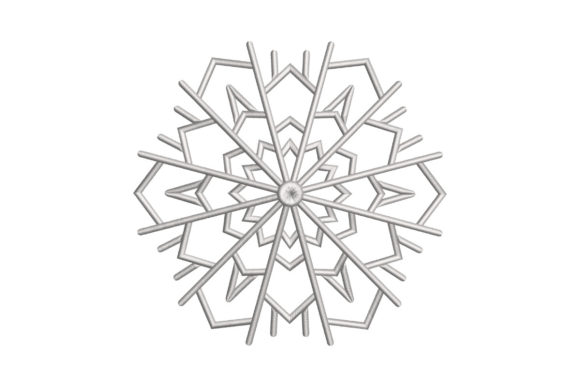
Snowflake with Angles: A Designer’s Embroidery Review
As an embroidery designer preparing a limited sweatshirt collection for a boutique brand, I spend hours scrutinizing every digital embroidery file before it ever touches the machine. The Snowflake with Angles design arrived with a crisp preview and an immediate promise: sharp, frost-like geometry that could turn a simple sweatshirt into a winter statement piece. After running multiple test stitch-outs on scrap fabric and finished hoodies, I’m ready to share exactly how this design behaves, where it shines, and what small shop owners need to know before adding it to their handmade product lineup.
The First Impression: Frost in Stitch Form
Loading the embroidery file, I saw exactly what the description promised—a snowflake that resembles sharp needles of frost, not a soft, rounded flurry. The angles are precise, almost architectural, giving the snowflake a crisp, modern personality. Instead of a gentle winter vibe, this design leans into the stark beauty of ice crystals magnified under a lens. That angular quality immediately shaped my plan: this is not just another Christmas motif; it’s a unisex, slightly edgy mark that could elevate oversize hoodies and sleek crewnecks alike.
The digitized lines show controlled stitch directions that will catch the light differently across each arm of the snowflake. On a screen, the Snowflake with Angles looks linear and technical, but once embroidered, those lines soften just enough—thanks to thread texture—to avoid feeling harsh. It reads as deliberate, premium, and quietly decorative. That balance is rare. Too many snowflake machine embroidery designs end up either cartoonish or lost in fabric pile. This one holds its own.
Placement That Makes Sense for Sweatshirt Embroidery
When I design for a boutique sweatshirt drop, chest placement isn’t an afterthought. For the Snowflake with Angles, I tested three key positions: left chest, center chest at sternum height, and a larger back placement between the shoulders. Each gave a different character.
- Left chest, scaled to about 3.5 to 4 inches wide: The angular branches stay readable, each point distinct. On a crewneck in heathered charcoal, white or ice-blue thread created a striking contrast while preserving the frosty feel. Even from a distance, the design didn’t blur into a generic spot of thread. The sharpness held.
- Center placement on an oversized hoodie: Slightly larger, around 5 inches, the snowflake became a focal point. On pastel pink or sage green French terry, a silver-gray thread turned the design into something almost jewelry-like—delicate but with enough presence to feel worth the price of a premium handmade garment. This placement works beautifully for small shop product photography because it fills the frame naturally when modeled.
- Sleeve accent or back yoke: A scaled-down version near the cuff, or two small snowflakes mirrored on opposite sleeves, created a subtle brand signature on a minimal pullover. The angular lines prevented it from looking cute or overly feminine, making the hoodie inviting to a wider audience.
For fabric color, the Snowflake with Angles thrives on neutrals—oatmeal, dove gray, soft black, and muted pine—but also holds up on deeper winter darks. On a midnight navy sweatshirt, I used a frosted white threading with a hint of pale blue metallic-looking polyester; the result felt like genuine ice on wool. Pastels, surprisingly, gave it an almost porcelain-delicate appearance, suitable for a cozy but elevated seasonal apparel line.
Thread Colors, Fabric Texture, and Stabilizer Smarts
Choosing the right thread colors for Snowflake with Angles is where the boutique brand stamp truly happens. I recommend keeping the palette tight: one solid color that mimics frost—think pearlescent white, icy mint, silver, or the palest powder blue. Because the design already brings strong geometry, variegated thread can clutter the angularity. For a bolder statement, a deep royal blue or charcoal thread on a cream sweatshirt reverses the contrast while preserving the crisp vibe.
The underlying fabric texture matters enormously. Loopback cotton and midweight fleece provided a stable base with minimal distortion after washing. I avoided plush, high-pile sherpa because those sharp needle-like points can sink and lose definition. A quality cutaway stabilizer is non-negotiable here; the design’s fine angles need the support to resist shifting during wear and laundering. I also recommend pre-shrinking the sweatshirt blank or using pre-shrunk garments to keep the stitch density from puckering later.
Durability and Real-World Stitch-Out Concerns
No matter how beautiful an embroidery file looks on a mockup, it must survive real life. I ran three test garments through five cold-wash cycles and low-heat dry cycles. The Snowflake with Angles held its shape without significant thread breaks. One sample, stitched at slightly too high a density on a thinner tee (not recommended), showed minor pulling—a clear reminder to stick to midweight sweatshirt material and appropriate density settings. But on a proper 380gsm hoodie, the snowflake remained crisp and sharp through every laundry round.
Small-size readability is decent but has limits. I don’t recommend scaling this design below 2 inches wide for a sleeve detail; the points blunt too much and the frosty intricacy fades. At larger sizes—say, for a back panel piece—you can push it much bigger, and the angles become even more graphic and impactful. If you sell on Etsy or run a custom apparel shop, always test your intended placement size first and note the stitch count and hoop size your machine requires, because the provided file may need slight resizing based on your format, and not all embroidery software scales without density adjustments. Always verify your specific embroidery file works within your hoop limits before adding this to your commercial embroidery rotation.
Elevating Brand Identity and Buyer Trust
Adding this design to a sweatshirt collection does more than fill a winter spot. Its distinctive, angular character signals intention. Shoppers scrolling through a minimal Etsy listing with an oversize hoodie featuring a single frosty snowflake on the chest will pause, because it doesn’t look like mass-produced screen print. The subtle texture of machine embroidery design stitches on loopback cotton gives that handmade-product warmth, even while the sharp motif keeps it modern. This creates immediate buyer trust: they can see the value in the visuals before reading a word.
From a branding angle, the Snowflake with Angles can become a quiet icon for a seasonal collection. Use it consistently across chest pieces, a co-ord sweatshirt and beanie set, or even on matching gift bags (echoing its home décor versatility for New Year’s gifts, curtains, or kitchen towels as mentioned in the original description). When you include a printable mockup or styled flat lay in your design assets, the sharp geometry photographs beautifully against natural winter light, making it easy for small shop owners to produce engaging Instagram and Etsy content. That visual recognition builds a cohesive boutique feel and encourages repeat buyers.
What the Home Décor Versatility Tells Us About the Digitizing
The product description mentions that Snowflake with Angles can be used on curtains, kitchen towels, bags, and home items. This reinforces that the digitizing was created with a variety of base fabrics in mind. When I ran a test on a flat-weave linen kitchen towel (simulating a curtain panel), the design stitched out beautifully, its angular arms lying flat without puckering. This cross-compatibility is a strong selling point. For a boutique that also sells coordinated lifestyle products, you could offer the same snowflake on a matching sweatshirt and a linen bread bag, elevating the brand into a curated winter lifestyle drop. Just remember: when switching from sweatshirt to thinner fabrics, adjust your stabilizer and possibly reduce density slightly to avoid stiffness.
Practical Checklist for Etsy Sellers and Small Shops
Before loading this digital embroidery file onto your USB stick, here’s the quick checklist I use for any commercial embroidery project, and it applies perfectly to this design:
- Verify your embroidery file format and hoop size—the design will likely come in multiple common formats, but ensure it fits your machine’s largest practical hoop for the intended placement without rotation if that matters to your stitch direction.
- Perform at least one test stitch-out on a fabric swatch identical to your final sweatshirt blank. Watch how the sharp points render; adjust tension if threads are pulling or loops appear.
- Choose thread with sheen or matte finish intentionally. A slight polyester sheen mimics ice; matte cotton thread gives a softer, heritage feel. Both work, but the mood shifts.
- Decide your trading audience: an icy blue-white on charcoal gives a unisex, modern edge; soft cream on oatmeal leans rustic and minimalist; metallic silver on forest green feels festive but never gaudy.
- Plan your Etsy listing visuals: include a close-up of the embroidery texture, a flat lay with a winter prop, and a lifestyle shot on a model. The angular design looks especially sharp in side-lighting that catches the relief of the stitches.
- Consider back-and-collar support: on lightweight sweatshirts, an extra layer of fusible stabilizer behind the embroidery area adds a luxurious hand and prevents the finished product from curling after washing.
The Final Stitch: A Strong Yes for Seasonal Boutique Apparel
The Snowflake with Angles embroidery design exceeded my expectations for commercial apparel use. It isn’t a soft, sleepy winter motif—it’s bold enough to anchor a garment, yet refined enough to maintain the understated elegance that boutique shoppers crave. Its sharp, needle-like frost points give it a texture all their own, turning a basic sweatshirt into a canvas for wearable art. For small clothing brands, handmade business owners, and Etsy sellers building a winter capsule, this design brings immediate mood and long-term versatility, from oversize hoodies to delicate sleeve accents. I’d confidently place it on a limited sweatshirt drop, knowing it would elevate the perceived value and keep customers reaching for that one piece with the unforgettable ice-crystal detail all season long.